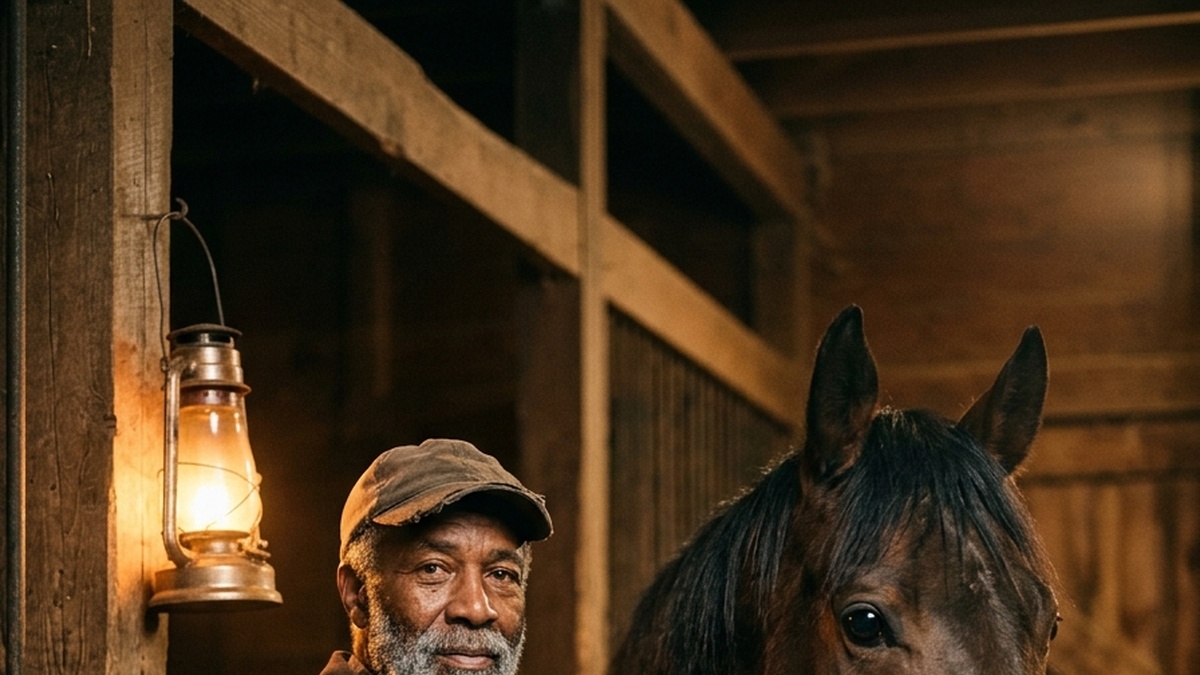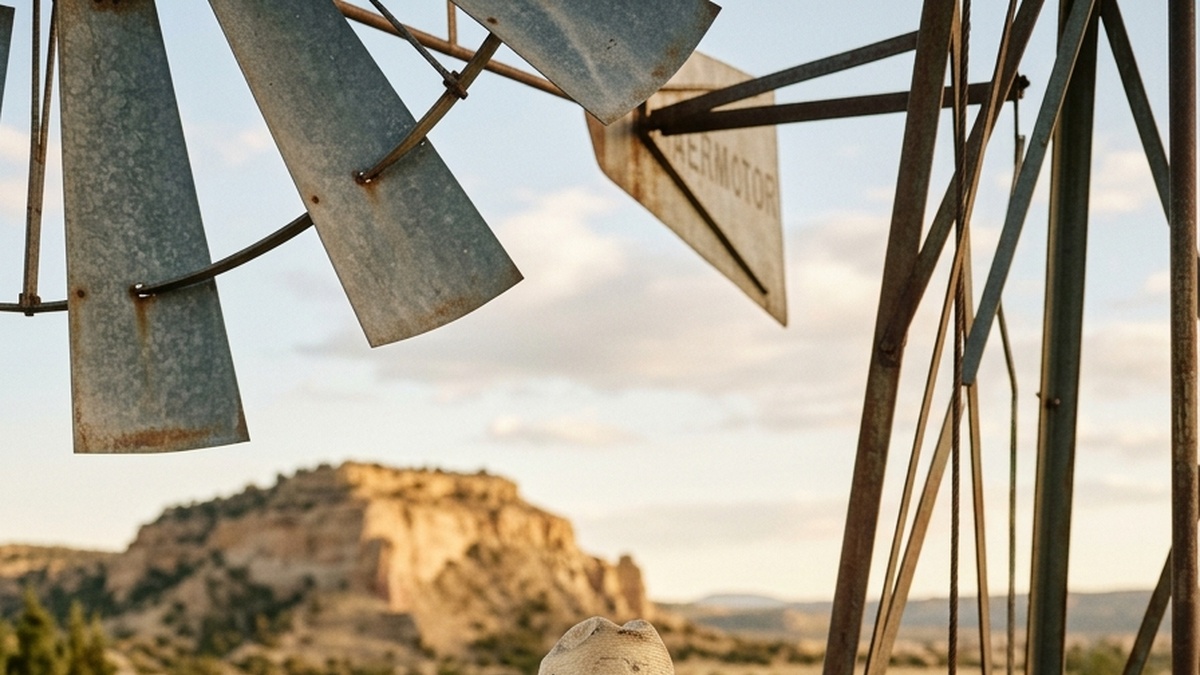
The crowd on the mesa went very quiet. One of the Archuleta boys took off his cap, as if somebody had died.
Carla walked over slowly. "Well," she said. "That's it, then."
"No," Neto said. "That's Wednesday."
He did not raise his voice. He looked down the open pipe for a moment the way a doctor looks at an X-ray. Then he turned to his great-grandson.
"Mateo. Bring me my father's fishing tool."
Neto explained it while they rigged it, because Lupe was frightened and Carla was angry and the explaining helped them both.
The rods were lying at the bottom of the pipe. They could not fall any farther than the plunger and the cylinder down there. The top of the string was now a coupling, sitting somewhere in the dark about a hundred and sixty feet down.
"This mouth slides over the coupling," Neto said, turning the iron tool in his hands. "These jaws open when it goes down, and they bite when you pull up. Like a finger trap. My father made it in 1951, after his own rods went down this same hole."
"How do you know where the coupling is?" Carla asked.
"I'll feel it."
They tied the tool to a long steel cable from the winch on Lupe's pickup. Neto took off his gloves. He held the cable in his bare hands while Mateo let it out slowly, foot by foot, down the pipe.
The wind roared over the mesa. Somebody's dog barked. Neto stood with his eyes half closed.
At a hundred and fifty feet, he said, "Slow."
At a hundred and fifty-eight, he felt it. A tiny tick through the cable, as the mouth of the tool kissed the top of the coupling and slid down over it.
"Now," he said. "Pull. Easy."
Mateo eased the winch back. The cable went tight and then went slack again.
"It slipped," Neto said. "Again."
They tried it twice more. Each time, it slipped. The sun was getting low over the Manzano Mountains. Carla looked at her watch and said nothing, which Neto thought was kind of her.
The fourth time, Neto had Mateo drop the tool a few inches past the tick and then wait for a slow count of five, so the jaws could settle. Then he nodded.
The cable went tight and stayed tight.
The winch groaned. Neto kept one hand on the cable. Inch by inch, then foot by foot, the string of rods came up out of the dark. When the first rusty coupling cleared the top of the pipe, Mateo let out a whoop that echoed off the arroyo.
Neto clamped the rod tongs on it. His hands were shaking. Only Lupe saw that, and she did not tell anyone.
They replaced the bad coupling with a new one from the hardware store in Mountainair. They lowered the rods back down, every section checked twice. They hooked the pump rod back to the mill.
At dusk, Mateo climbed the tower one last time and released the brake.
The wheel did not move at first. It sat there, facing the wrong way, stiff from thirty years. Then the tail vane swung, and the wheel turned into the wind with a long creak, and began to spin.
The pump rod rose and fell. Rose and fell.
Nothing came out of the pipe for twenty strokes. Thirty. Carla stood next to Neto with her arms crossed tight.
On the forty-first stroke, the pipe coughed. It spat air. Then a stream of cold, clear water poured out into the old stock tank, and kept pouring.
The crowd cheered like it was a football game. Lupe hugged her grandfather so hard his hat fell off.
Carla Ortega just looked at the water for a while. When she turned to Neto, her eyes were wet.
"My dad ran cattle out by Encino," she said. "When I was little, he had a man out to fix our windmill. The man cracked the gearbox and charged him two hundred dollars, and my dad never trusted another one." She wiped her face. "I think I was still mad at that man. I'm sorry, Mr. Baca."
"You were protecting the village," Neto said. "That's your job."
"Will you teach me how it works? So we always have it?"
"Come Saturday," Neto said. "Bring gloves."
Mateo carried the fishing tool back down the mesa road himself. At the shed, he hung it on its nail and stood looking at it.
"Abuelo, did your father ever have to use it again?"
"Twice," Neto said. "Once in 1962 and once in 1977. I held the cable in 1977. I was younger than your mother is now."
"Will I ever use it?"
Neto thought about the question honestly, because it deserved that. "If you keep that windmill long enough," he said, "you will."
Mateo nodded slowly, like a man who had just been handed a job.
The fire tanker filled that night. The stock tanks filled by Thursday morning. The state lab in Albuquerque called Friday to say the water was fit for washing and for livestock, and the village voted that evening to keep the windmill as its backup well.
Until then, Lupe ran her café on paper plates and the pallets of bottled water the church had trucked in. The windmill water filled her mop bucket and the restroom tanks, and that was enough to open the doors. The café opened at six on Thanksgiving morning, and by eight every booth was full of hunters.
Neto sat on the bench outside the café door with his coffee in the cold sun.
Up on the mesa, the old wheel turned into a fifteen-mile west wind, the same wind his father had pumped with, and with every turn a little more cold water came up out of the dark.