Vern Lindahl licked his finger, held it up in the wind outside the Redwillow Crossing fire hall, and told the young chief that if the town lit its playoff bonfire Friday night, it could lose the school.
Brett Sandoval laughed. He did not mean it unkindly. He was thirty-four and had been fire chief for one year, and he liked Vern the way you like an old tractor you are not sure still runs.
"Vern, it's November," Brett said. "We've had a bonfire every playoff week since 1962."
"We've never had a November this dry," Vern said. "Look at that grass."
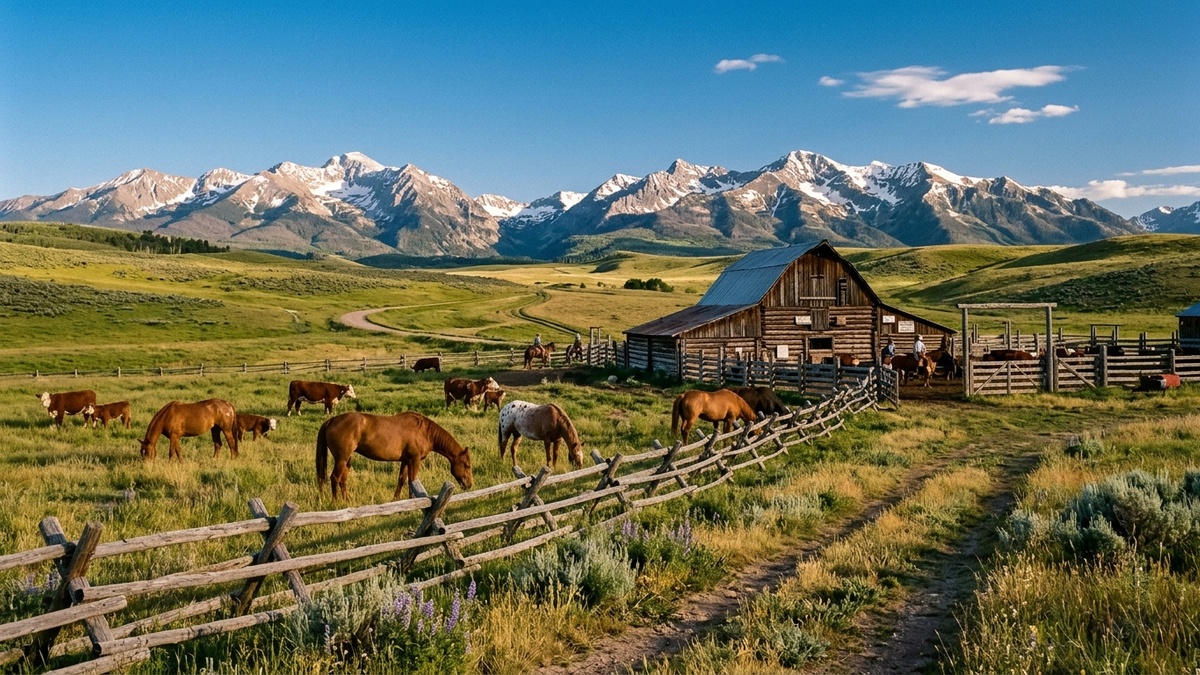
They both looked. The pasture south of town ran right up to the back of the school, brown and stiff and knee-high. Past it, the corn stubble ran on for miles, and past that, the Sandhills began, rolling away to the south in waves of pale grass.
"I'll have two engines at the bonfire," Brett said. "We'll be fine."
Vern was seventy-nine. He had run cattle on the Lindahl place south of Redwillow Crossing, Nebraska, his whole life, and he had been the volunteer fire chief for forty years before Brett. He had fought more grass fires than he could count. The worst one was in March of 1972, when he was twenty-five. A fire came out of the hills on a south wind and burned to the edge of town before anybody could stop it.
He had learned something that day from old Gus Ahlberg, the chief before him. Gus had saved the east end of town by doing something that looked crazy. He had set a second fire on purpose.
"You can't outrun a grass fire," Gus told him afterward. "You can only take away what it wants to eat."
Every fall since, Vern had disked a firebreak around the south and west edge of town with his own tractor. Ten feet wide. Bare dirt.
This year, for the first time, his tractor's transmission had quit in September. He had asked the town to do the disking. The town had said it would get to it.
It had not.
Vern had gone to the council meeting in October to remind them. He had stood up at the end in his good shirt and said his piece, and the council president had thanked him for his years of service and moved on to the new playground equipment.
On the drive home, his wife had patted his knee. "They think you're an old man worrying," she said.
"I am an old man worrying," Vern said. "That doesn't make me wrong."
Thursday, the wind came out of the southwest at thirty miles an hour. The humidity dropped to eleven percent. The weather service put out a red flag warning for the whole county.
Vern drove into town and found Brett at the fire hall.
"Wind's going to shift tomorrow," Vern said. "There's a front coming. When it comes through, the wind'll swing around to the northwest and blow twice as hard. If a fire's going when that happens, the side of it that was burning slow will turn into the front."
"I saw the forecast, Vern."
"Then cancel the bonfire. And get the county disk out here and plow me a break behind the school."
Brett rubbed his eyes. "The county disk is on the north end. They say Monday. And the town council's not going to cancel the bonfire the night before the state quarterfinal." He put a hand on Vern's shoulder. "I hear you. We'll be careful."
Vern drove home and did not sleep much.
As it turned out, the bonfire never got lit.
At four o'clock Friday afternoon, a combine was finishing the last strip of corn on the Petersen place, three miles southwest of town. A bearing on the header ran hot. The driver never saw the first spark land in the dry stubble behind it.
By the time the driver saw the smoke in his mirror, the fire was a hundred yards wide and running northeast on a forty-mile-an-hour wind.
Straight toward Redwillow Crossing.
Vern heard the siren from his porch. He looked southwest and saw a brown wall of smoke rolling up out of the corn, leaning hard toward town. He got in his pickup.
By the time he reached the south edge of town, the fire hall was empty. Both engines were out on the county road, trying to hold the fire's left flank where it was eating toward the Petersen farmstead. Brett's voice was on the radio, calm and fast, calling for help from three towns away.
Vern stopped his truck behind the school and got out.
The football team had been practicing. The coach was hurrying the boys into a bus. In the school, the last of the teachers were coming out with armloads of papers. And behind the school, the dry pasture ran straight south toward the fire, unbroken, nothing in the way.
The town had never plowed the break.
Vern looked up at the sky. The smoke was leaning northeast. But far off in the northwest, behind the town, he could see a line of low gray cloud. The front was coming early.
When it got here, the wind would swing. And all that fire burning slow along its right side would turn and come straight at the school.
Vern reached into the bed of his pickup and pulled out an old red can with a long, curved spout. He had not used it since 2009.
It was a drip torch, and it was the last thing anyone in Redwillow Crossing would have expected him to light.